
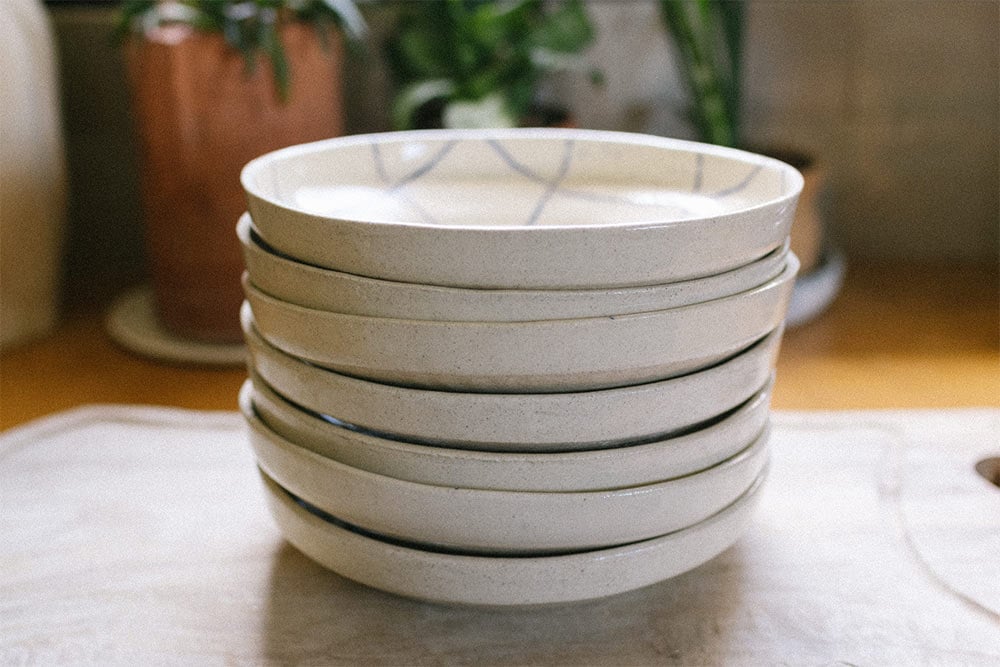
Many people still imagine that handmade tableware is fragile, that you have to be constantly careful or save it for special occasions. Yet when I create my pieces in the workshop, I imagine them first and foremost for real life. A kitchen that’s lived in, meals that follow one another, children setting the table a bit quickly, plates stacked in a drawer without thinking.
I’ve been using some of my own creations daily for several years now, and I wanted to share with you the real result after four years of intensive use. Because durable handmade tableware, for me, should be able to accompany everyday life without becoming a source of stress.
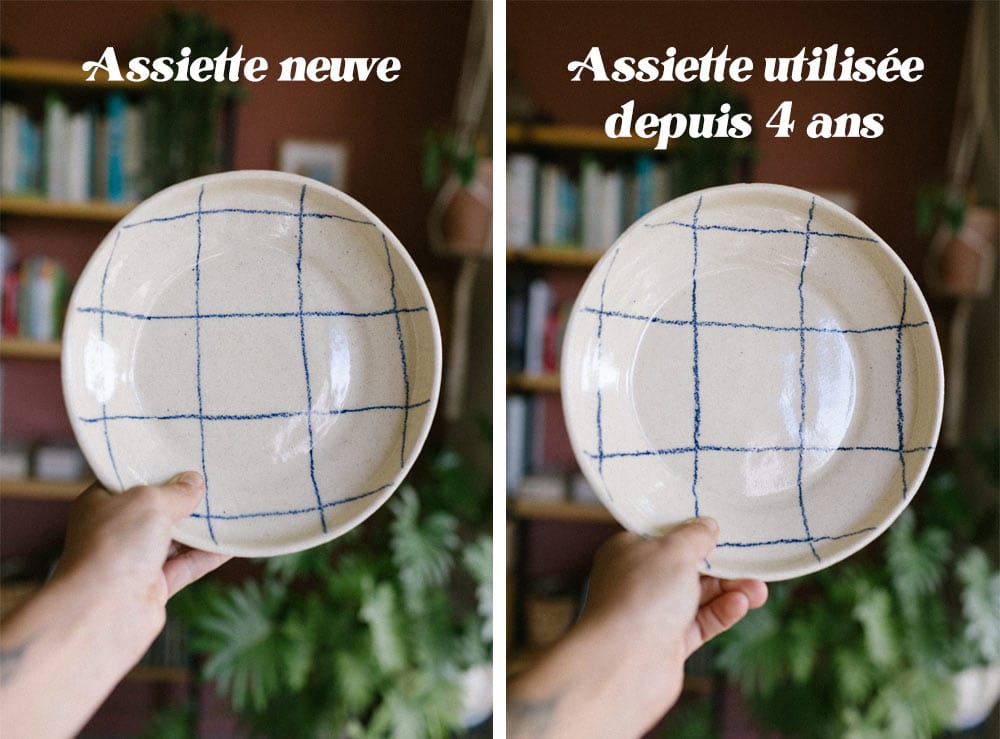
In the photo below, you can see side by side a new bowl and one of those I’ve been using every day for four years.
Handmade tableware used without special care
My plates live exactly like any other tableware in the house. They’re stacked in a large drawer with the others, handled several times a day, and constantly pass between different hands, including my child’s when he sets the table.
I have eight in total, and they’re used for practically every meal. I use them morning, noon, and night without really thinking about it. They go straight from the meal to the dishwasher, then back into the drawer.
I almost never wash my dishes by hand. In fact, honestly, I often do more damage when I wash something in the sink than when everything goes in the machine.
For me, handmade tableware that couldn’t handle the dishwasher simply wouldn’t be suited to my daily life.
👉 Discover the handmade stoneware bowls from the workshop
Why bowls have become my favorites
For a long time, I thought flat plates were the most versatile. And then, over time, I realized I almost always used the bowl models.
I find them more practical for so many everyday dishes. A composed salad, pasta, curry, Asian soup, rice, a dish with a bit of sauce… everything stays better contained thanks to the raised edge. You eat more comfortably and the table stays cleaner too.
It’s probably the category of tableware I use most in the whole house today.
And unlike some very fragile or too precious plates, these really live with us. They go from a yellow checkered tablecloth to a more understated table, then come back for an impromptu dinner without us asking any questions.
The real result after 4 years of daily use
Honestly, the result surprises me when I compare a new piece to those used daily for several years.
The glaze is still shiny. The colors have barely changed. The blue squares keep the same intensity and the stoneware hasn’t dulled despite hundreds of trips through the dishwasher.
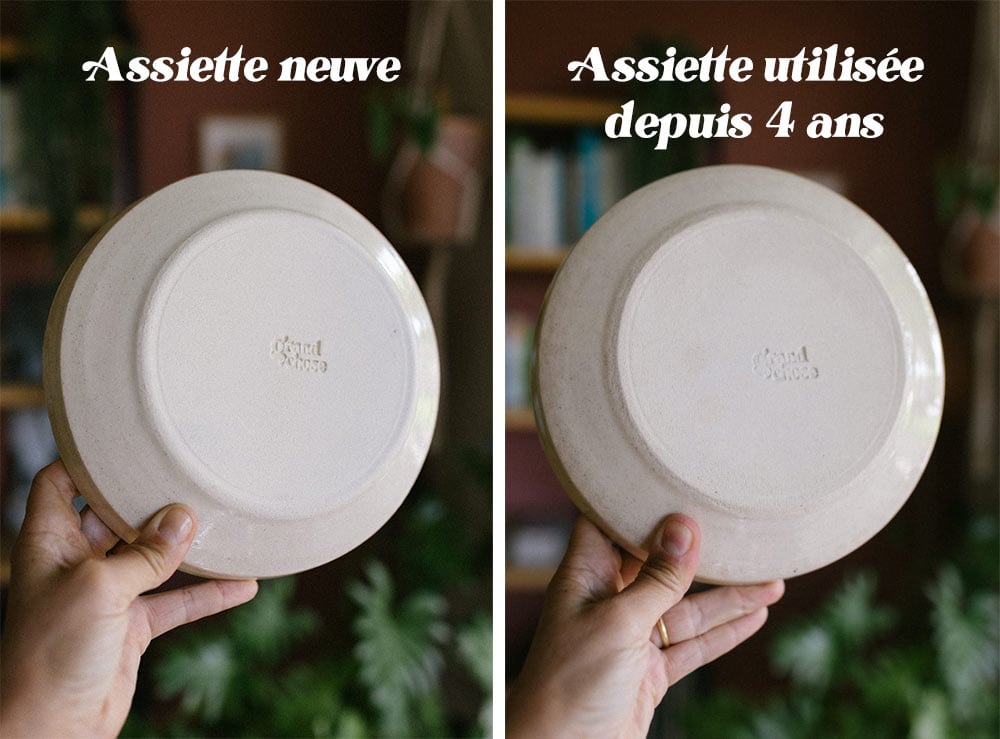
Of the eight plates used constantly, only one has a small chip on the edge. Most likely a one-time impact, because even though I handle my pieces with care, they remain above all everyday objects.
And ultimately, I find that rather reassuring. Handmade tableware doesn’t need to be perfect forever to be durable. It mainly needs to be able to live normally in a real home.
👉 Read also: why stoneware is ideal for everyday tableware
Why stoneware is an ideal clay for durable tableware
Stoneware is often chosen by ceramicists to create durable handmade tableware because it has very high strength once fired.
In the workshop, my pieces are fired at around 1250°C. This very high temperature transforms the clay and makes it particularly dense and resistant. Stoneware withstands repeated use much better than a more porous or fragile clay.
Of course, no tableware is completely unbreakable. A badly placed impact is still an impact. But high-temperature stoneware allows you to create objects truly designed for intensive daily use.
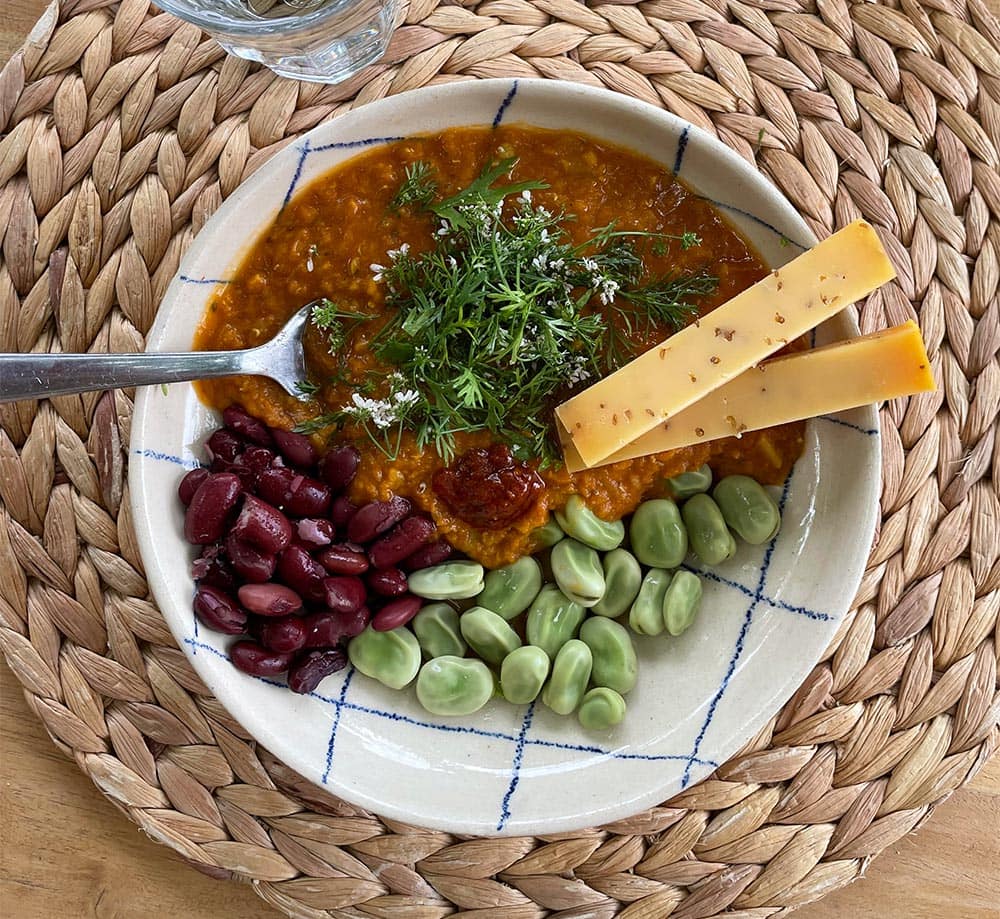
This is important to me because I never wanted to make pieces “just to look at.” I love the idea of handmade ceramics that accompany everyday meals, rushed mornings, large gatherings, and family routines. Proof with a little image of my lunch today 😉
Handmade doesn’t prevent durability
We often contrast craftsmanship and robustness, as if a handmade object must necessarily be fragile or delicate to use. I think exactly the opposite.
Handmade objects sometimes take their place in everyday life more easily because they already possess a human presence. We more naturally accept their small irregularities, their nuances, or the discreet traces of time. And honestly, I much prefer a plate that really lives rather than a piece left in a cupboard for fear of damaging it.
For me, the beauty of durable handmade tableware lies precisely there: in its ability to pass through the years while continuing to accompany real life.


