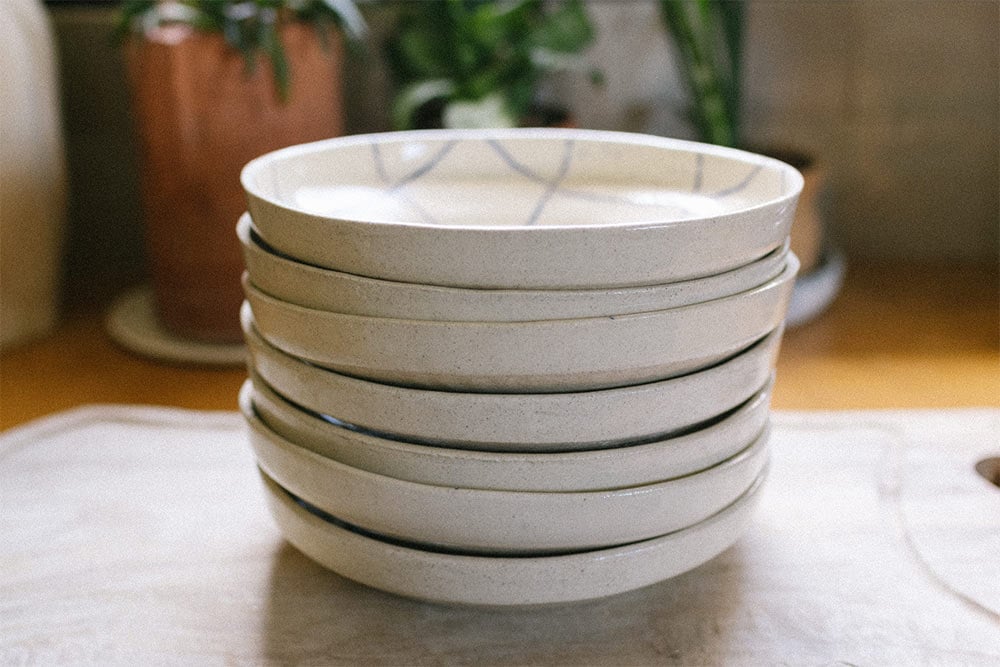
Welcome to my workshop in Pernes-les-Fontaines. Here, between the bags of clay and the brushes, I spend a lot of time thinking about how my objects will live in your home. I chose to create artisanal stoneware tableware because it is a material that, in my opinion, brings together everything you expect from an everyday object: beauty, authenticity, and rock-solid durability.
Choosing handmade pieces means inviting a story to your table, but it’s also choosing sustainability. In this article, I share with you the reasons why stoneware has become my favorite material for Grandchose.
Solid tableware that stands up to life’s ups and downs
The first question people often ask about handmade ceramics is about their fragility. However, one of the greatest strengths of my production is offering solid tableware. The secret lies in the firing temperature. Stoneware is a clay that is fired at a “high temperature,” around 1250°C.
At this heat, the clay vitrifies, which means it becomes as hard as stone and completely waterproof. Unlike other materials, it isn’t afraid of the little bumps of daily life, like plates touching in the cupboard or a sharp fork strike. It’s a ceramic made to last for years, without chipping at the slightest touch.
Practicality and care: stoneware at your service
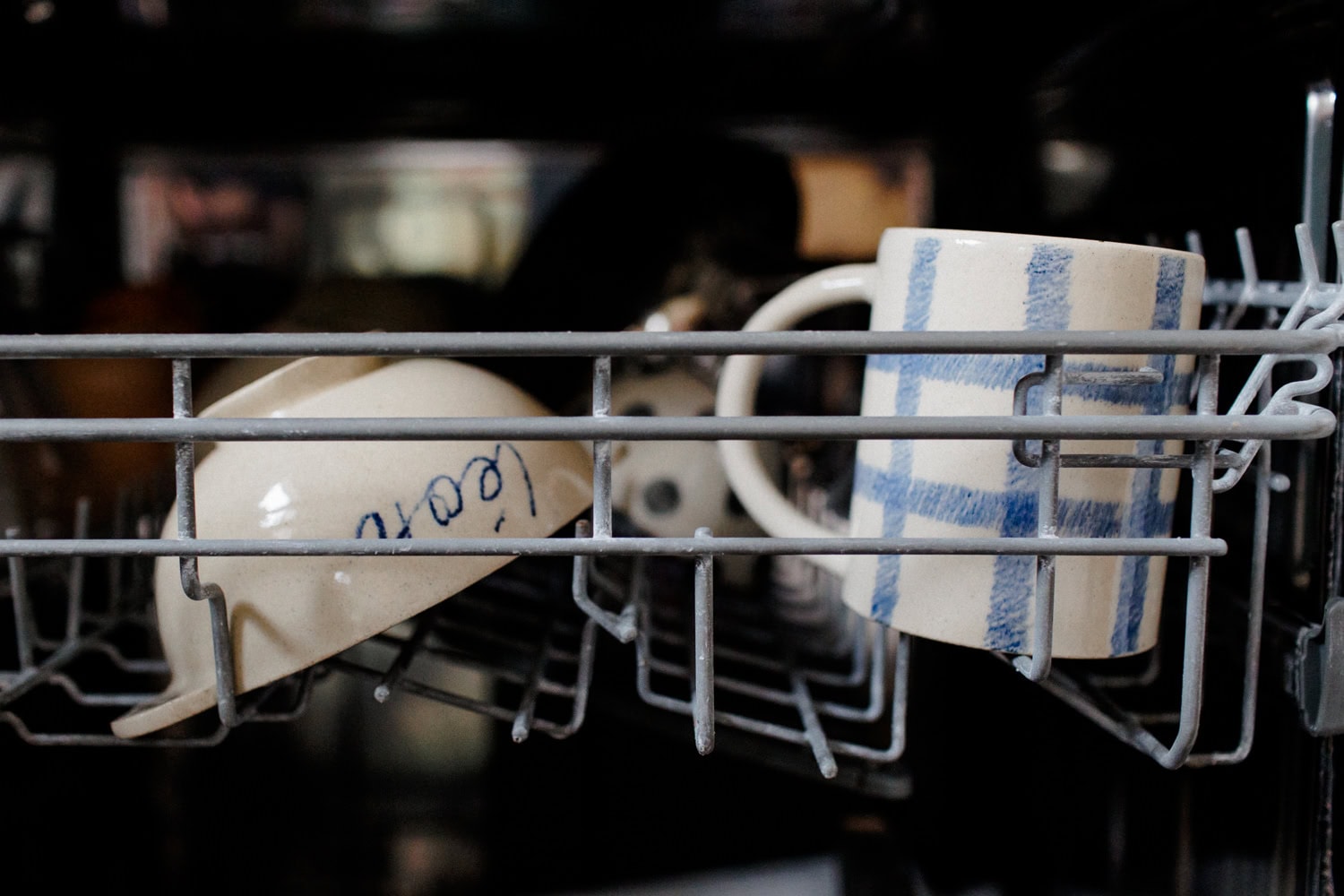
As a creator, I’m convinced that craftsmanship shouldn’t be a constraint. My artisanal stoneware tableware is designed for busy lives. It’s essential to me that you can use your mugs and bowls without a second thought. That’s why all my pieces are perfectly dishwasher and microwave safe.
The glaze I use is stable and robust: it won’t lose its shine after several wash cycles. Plus, since stoneware is a non-porous clay after firing, it doesn’t hold onto odors or stains, making it a perfectly hygienic choice for daily food use.
Thermal properties: a material that keeps heat and freshness
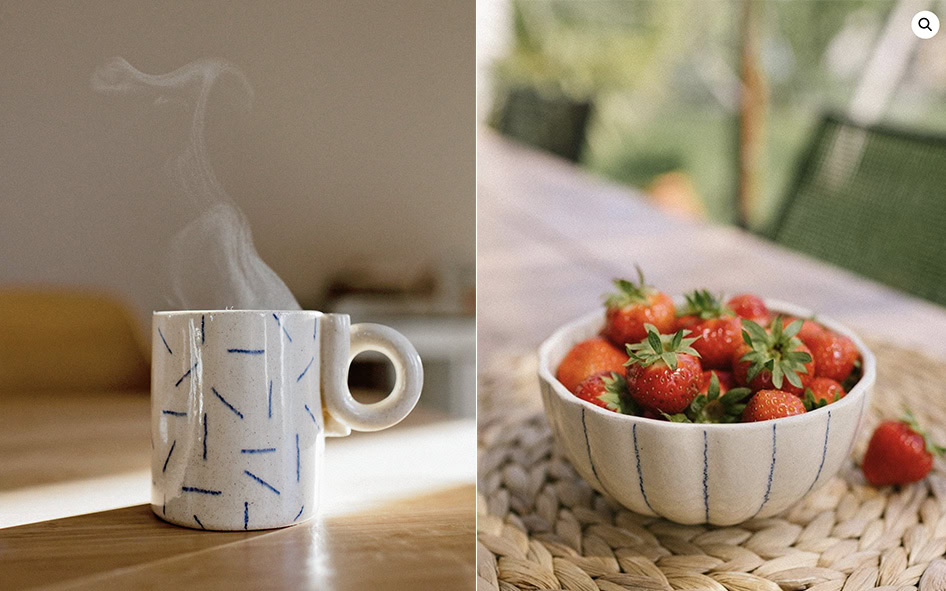
Another technical advantage of this artisanal stoneware tableware lies in its thermal inertia. Stoneware is an excellent insulator. If you’re used to drinking your tea or coffee while taking your time, you’ll notice that the heat is kept much longer than in a very thin industrial cup.
It’s a very nice comfort, especially in winter. Conversely, during our beautiful summers here in Provence, a stoneware bowl will keep your preparations cool (like a gazpacho or a yogurt) at the right temperature for longer. It’s this alliance between thermal performance and raw aesthetics that makes the tasting experience so special.
👉 Discover my range of stoneware tableware
A balance between different clays
I often talk with colleagues who work with earthenware. It’s a beautiful clay that allows for extremely bright colors and incredible fineness, often used for very decorative or traditional pieces. However, for the intensive use I plan for Grandchose objects, stoneware remains my favorite.
It offers a sense of weight and presence that I really like. Touching a blue-penciled mug means feeling the density of the clay, its subtle natural speckles that enrich the visual texture of the piece and the relief of the glaze. It’s this “grounded” and reassuring side that defines my work.
This robustness of stoneware doesn’t stop at tableware: I also use it for my technical objects, like my ceramic garlic grater, another kitchen essential that I presented to you in a previous article to simplify your cooking prep.
Supporting French craftsmanship and slow made
Finally, choosing my artisanal stoneware tableware also means choosing local and mindful French craftsmanship. Each piece I take out of the kiln in Pernes-les-Fontaines is unique. The blue pencil lines, the slightly irregular checks, the nuances of the beige stoneware… All of this tells the story of a human manufacturing time, far from mass production.
In addition to having solid and functional tableware, you own an object that has a soul. Whether it’s for a gift (like my nickname bowls “Bichette” or “Loulou”) or for yourself, you’re betting on quality that doesn’t go out of style and that values manual know-how.